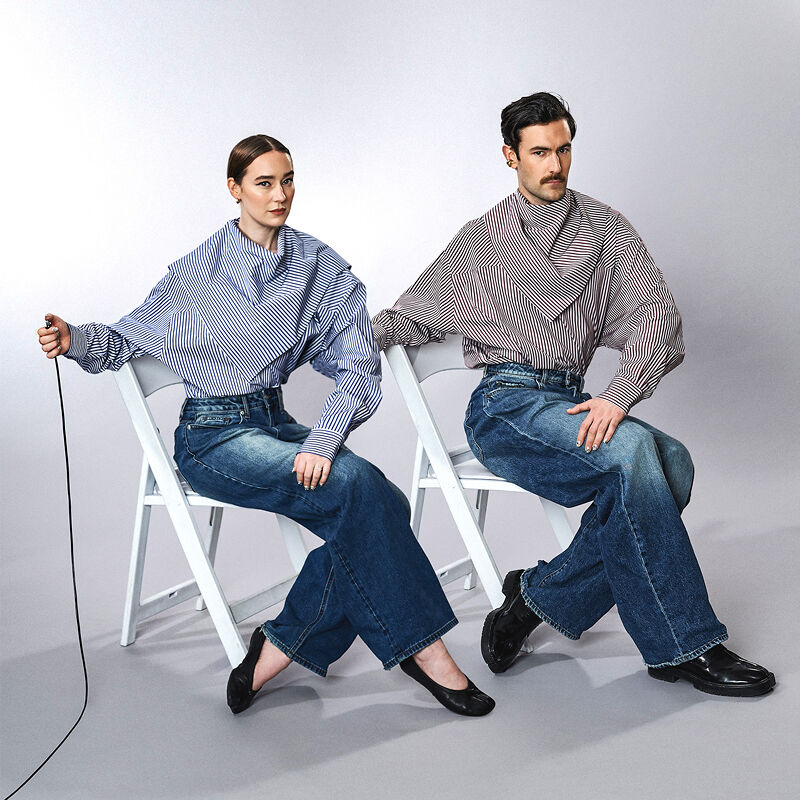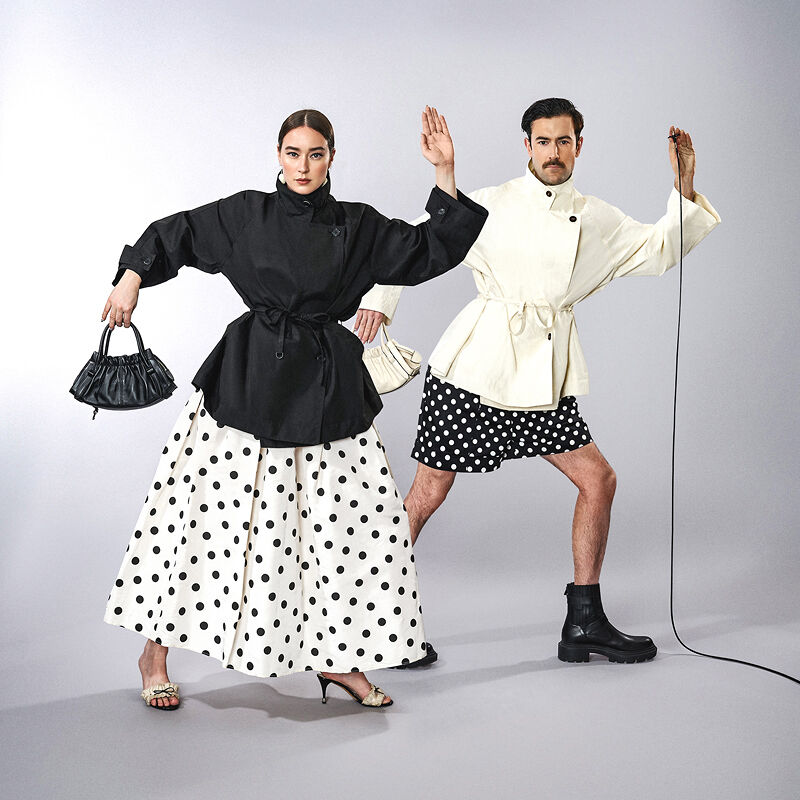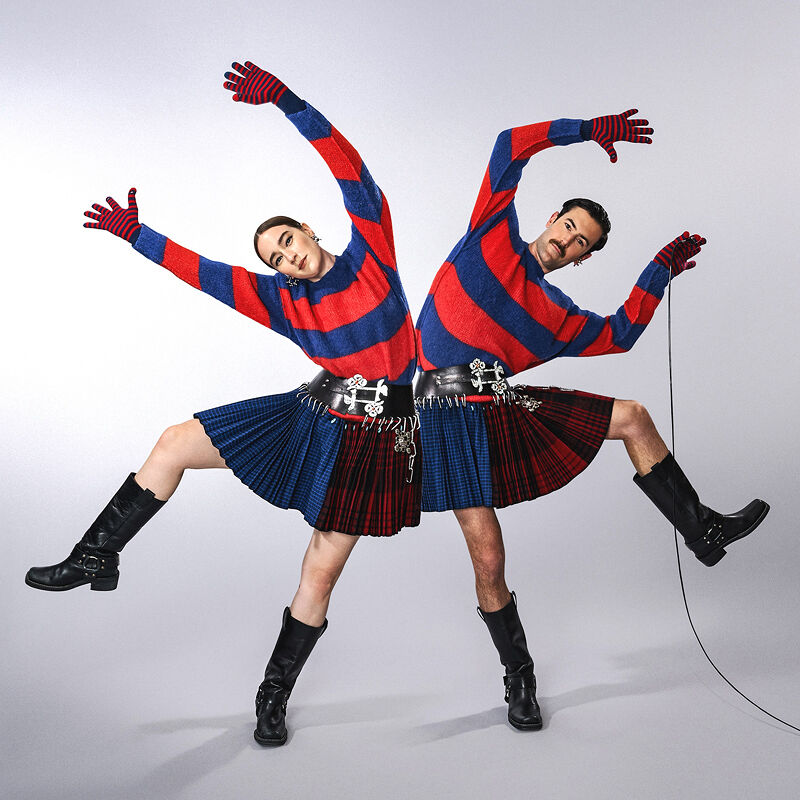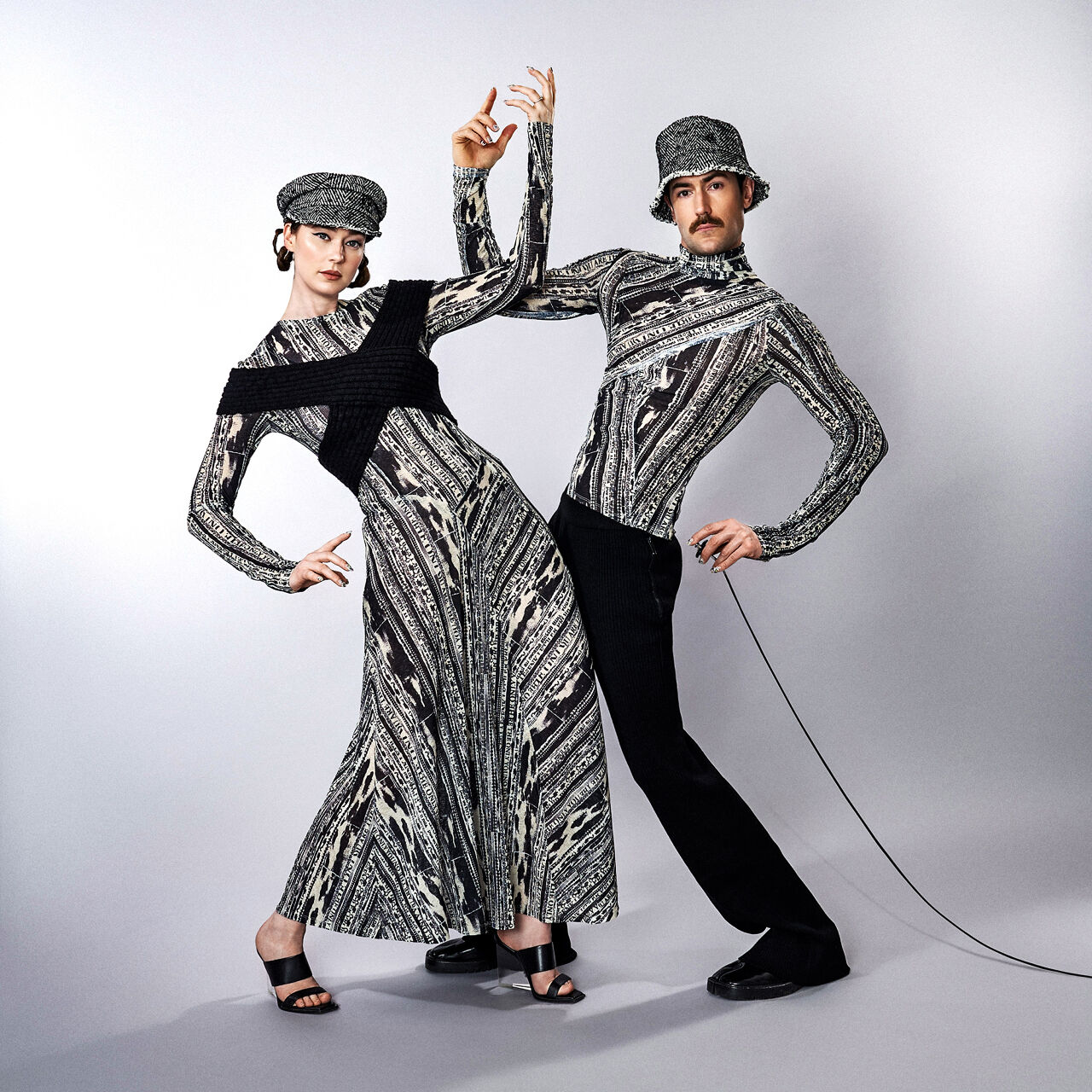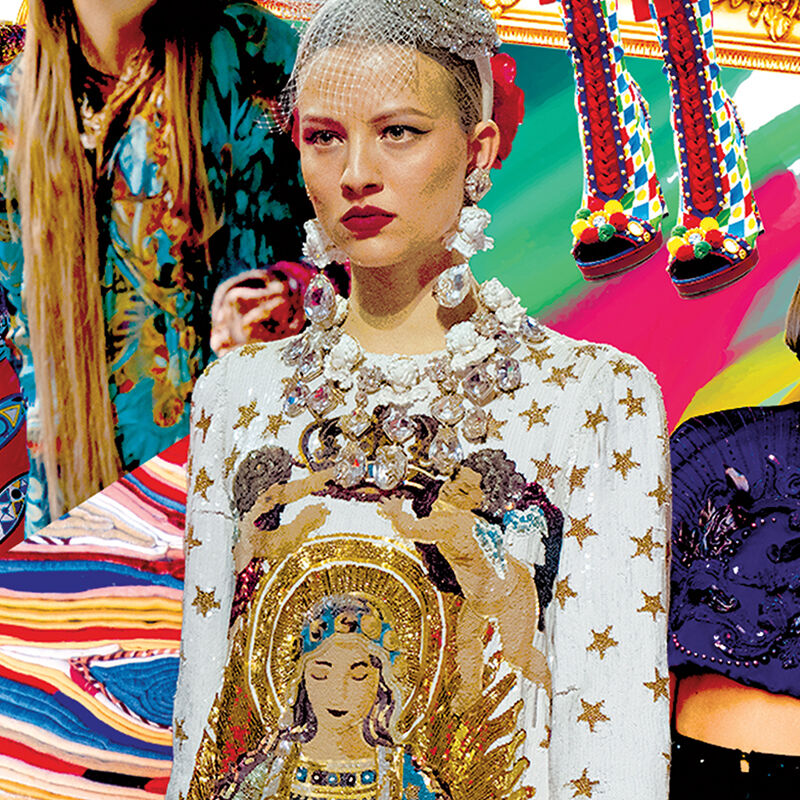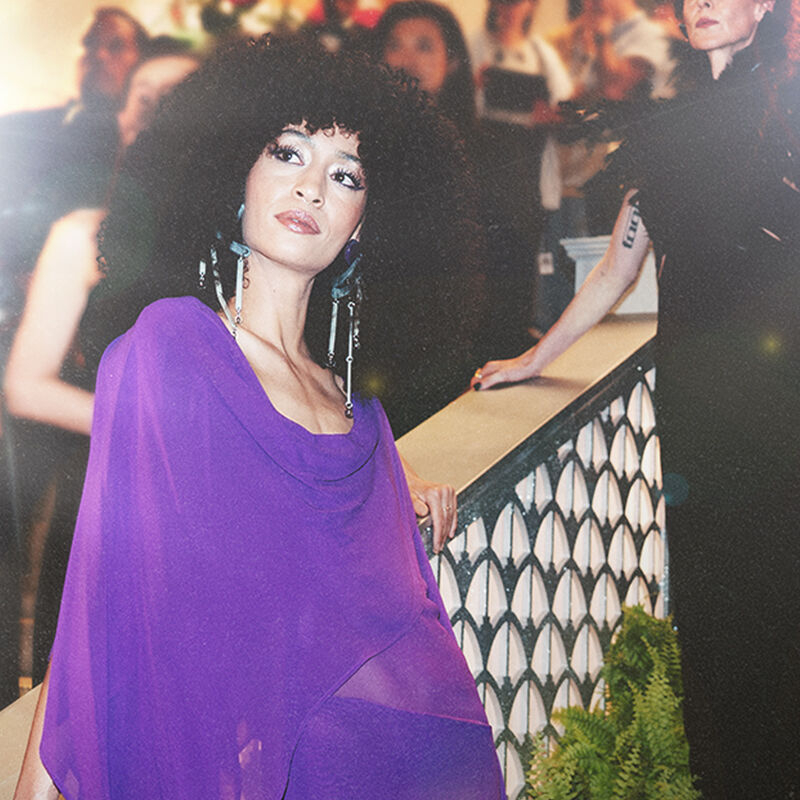
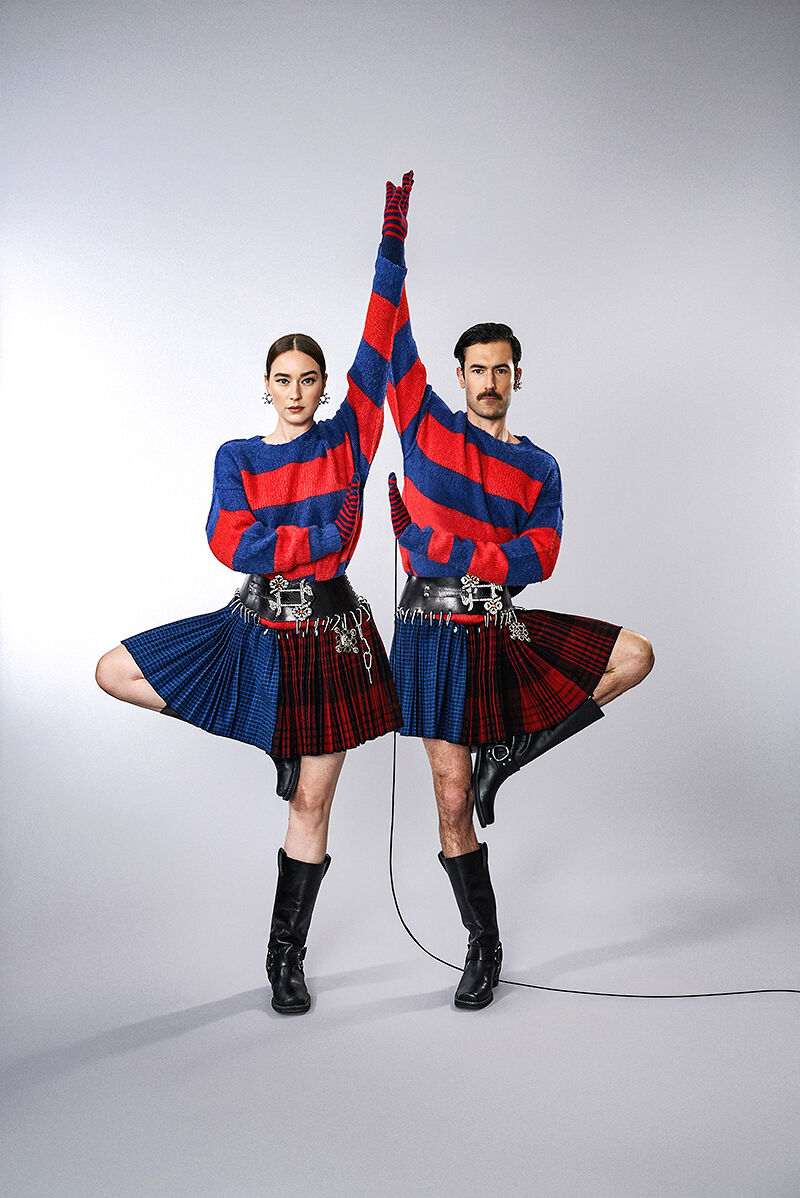
As this sense of belonging becomes more fluid, so does the way we dress. In an era shaped by shared authorship, softened distinctions and blurred boundaries, matching outfits evolve into a language of togetherness. Dressing alike becomes a visual expression of partnership where silhouettes, proportions and gestures circulate freely between two bodies and one wardrobe, increasingly functioning as a single system beyond codes.
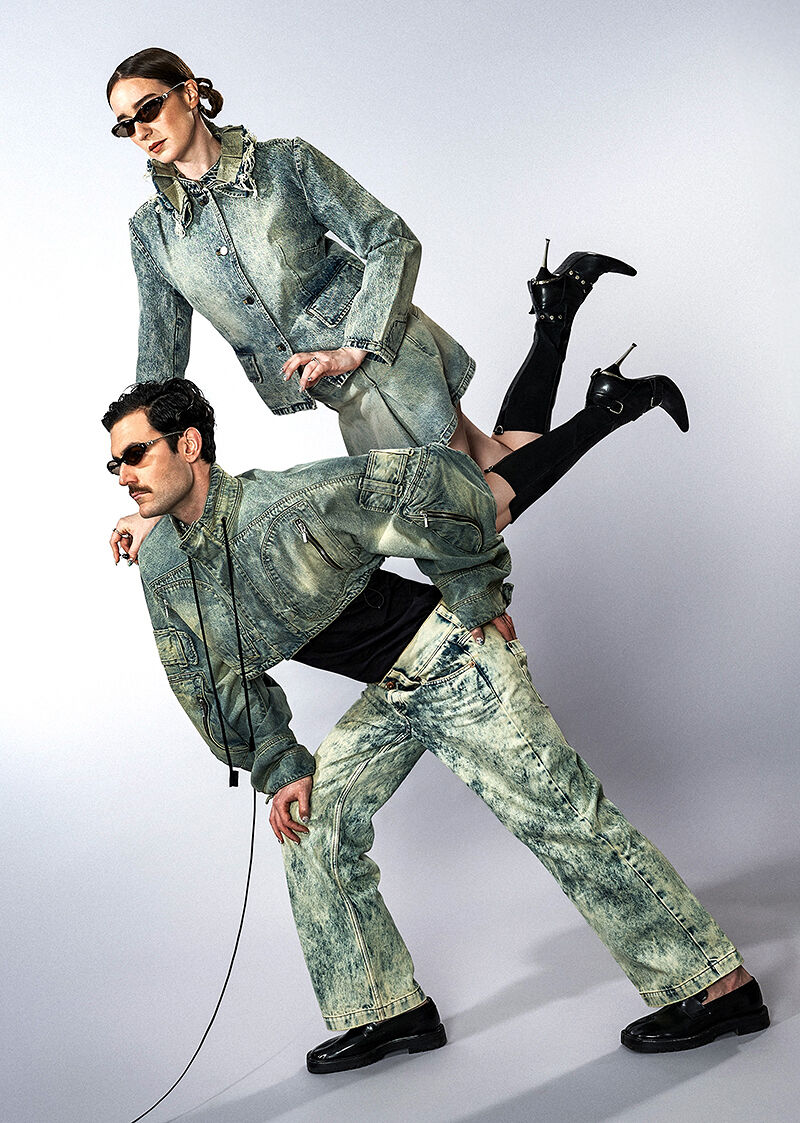
For us, matching outfits began as a statement more than 10 years ago, a visual declaration of love, commitment and collaboration. It quickly evolved into a daily performance using clothing as our medium. Sharing one closet opened a space for invention, where boundaries blurred between fashion and art, and two people became one. Matching became a symbol of unity and defiance, expressing a shared identity beyond gender or cultural norms. It gave us the freedom to dress more boldly, to experiment editorially and to see styling as a creative act.
From color harmonies to identical prints, it turned our everyday into an evolving visual philosophy.
We met as students in photography school, started to work together and eventually fell in love. When we started dating, it became evident. We merged our styles, not just visually but also conceptually into a single, shared entity. This choice to dissolve individual identity in favor of a collective one became the foundation of our work and relationship. It was a manifesto to renounce personal labels, roles and even names in service of something larger — a living, breathing collaboration. That vision gave birth to our artistic duo Cesar Love Alexandre and later Young Emperors. From photography, our practice expanded into direction, performance and influence, always led by same all-for-one principle. Matching isn’t just our signature; it’s our structure, a framework that allows us to co-create, reinvent and move through the world in perfect sync.
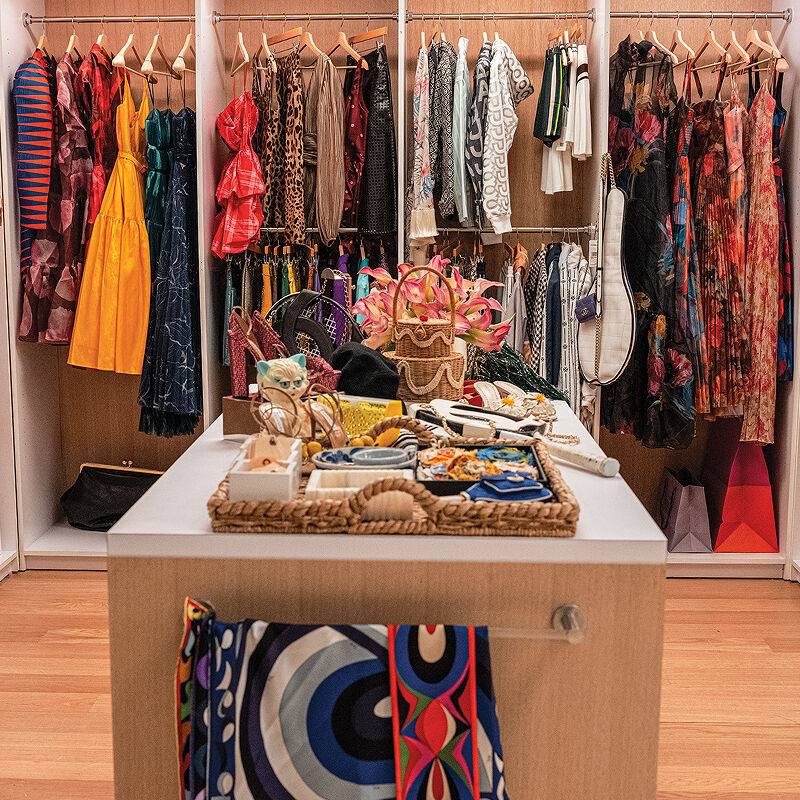
A shared wardrobe becomes a quiet act of sustainability: reducing excess, extending the life of garments and making fashion more thoughtful, both economically and ethically. Vintage shopping mirrors this freedom. Pieces aren’t gendered, seasonal or size-bound. Instead, you’re drawn to what resonates, immediately imagining new ways to wear it. Sharing a closet works the same way. You stop dressing according to labels and start seeing potential in everything. Suddenly, you are wearing the pieces; the pieces are not wearing you.
Although matching outfits might be a trend to look out for in 2026, they have long been part of art and fashion history. Looking back at the many movies that used coordinating costumes as a visual storytelling trope, at the 1960s Space Age matching outfits of Courrèges and Cardin or the iconic Jean Paul Gaultier fall/winter 1999 runway show featuring complementing couples, we see how impactful and relevant matching can be.